


A convocatòria de l'Alt Consell d'Amazighs de Líbia (HCAL), es celebrarà a Trípoli una reunió d'emergència important sobre la situació política a Líbia el dimecres 9 de febrer de 2022. En concret, es tractarà dels intents de forçar el pas dels diferents partits que lluiten pel poder a Líbia per validar una Constitució que els amazics han rebutjat. La reunió a la qual l'HCAL va fer una àmplia crida en la direcció d'activistes, defensors dels drets humans i advocats en particular pretén ser un congrés sobre el tema "La visió dels amazics de Líbia de la futura Constitució: els problemes i solucions".
Com a recordatori, va ser des del 2011, molt abans de la caiguda definitiva del règim de Gaddafi, que els amazics van haver de fer saber que res ni ningú podia qüestionar els seus drets legítims i naturals. Al vídeo següent, prop de 40.000 manifestants a la Plaça dels Màrtirs de Trípoli van cantar l'himne nacional libi a Tamazight el 27 de setembre de 2011 (Gaddafi encara era viu): va ser un veritable espectacle de la força amazic al cor de Trípoli.

Most Viewed Posts
-
 Sota el nom "Cummatti Giuvintù" joves independentistes europeus es van reunir a Palerm, Sicília per forjar una aliança entre nac...
 -
 El moviment Voorpost va convocar a Gant (Gent) el 17 de setembre del 2016 una manifestació contra el fet que Turquia entri a la UE . Tur...
 -
 El moviment de joves padans, Movimento Giovani Padani ( MGP ), organització juvenil de la Lega Nord creada el 1.991, va celebrar el 17 de s...
 -
 Thousands of schoolchildren could receive their first Gaelic language lessons thanks to a Scottish Government funding award. Feisean nan Ga...
 -
 L'entitat Practica Lingua va inaugurar el 16 de setembre les seves instal·lacions a Bastia. L'entitat ha decidit formar adults en ...
 -
 L'Associu Sulidarità ha convocat a la societat civil corsa el 24 de setembre. El lema, en cors, és "Ha arribat l'hora...
 -
 El portaveu de Baloch Students Organization-Azad (BSO-A) ha denunciat avui les les desaparicions forçades constants des del primer dia d...
 -
 Death toll in ongoing Kashmir Intifada rises to 98. Two persons were killed and over 100 injured as protesters defied curfew at over 90 pl...
 -
 La capital de Gal·les, Caerdydd, va acollir una nova concentració del moviment civil Yes Cymru el 17 de setembre . L'acte va homenatjar...
 -
A new militant group, the Niger Delta Searchlight, NDS, has threatened to continue attacks on pipeline installations in the Niger Delta...
2022/02/08
L'Alt Consell d'Amazighs de Líbia convoca una assemblea popular per debatre la nova constitució líbia i el seu reconeixement com a minoria
2022/02/06
Congrés del Forum d'Oc amb un creixement de socis del 23 %
Dissabte 5 de febrer a la Comoedia de Toulon, el celebrà el seu Congrés el Forum d'Oc, amb plantilla reduïda a causa del covid, el seu president es diu satisfet per l'evolució de l'estructura, que ara inclou prop de 700 socis, individuals o col·lectius, en lloc dels 570 del 2020. Les restriccions sanitàries no havien impedit que el Fòrum d'Oc adquirís nous membres: "des de la nostra creació, el 2014, n'hem multiplicat per sis", amb un salt important el 2021, any de la Llei Molac. I, efectivament, és meritòria l'acció proselitista, que permet donar a conèixer el nombre d'aquests socis: 573 socis, entre els quals 40 empreses, 55 municipis, dos Departaments, 25 artistes, 75 gestors culturals, 164 associacions i finalment 215 electes.
El Fòrum d'Oc rellança la dinàmica per a l'ensenyament de l'occità. L'entitat que reuneix regionalistes a la Provença Alps Costa Blava assessora ajuntaments i empreses que volen introduir el provençal, l'Alpin d'Oc i el Niça en la seva comunicació. Amb la llei Molac, ha engegat una dinàmica i ara vol que els electes s'impliquin.
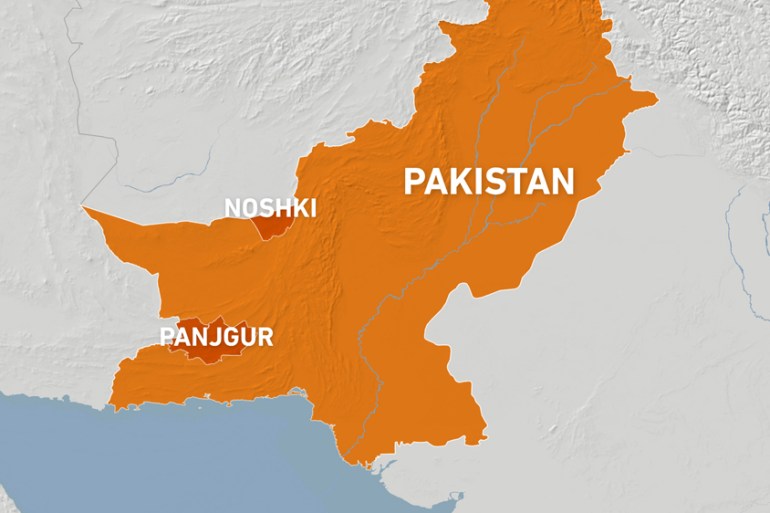
La guerrilla balutx anuncia la mort de 195 soldats paquistanesos en l'assalt a les casernes de Noshki i Panjgur

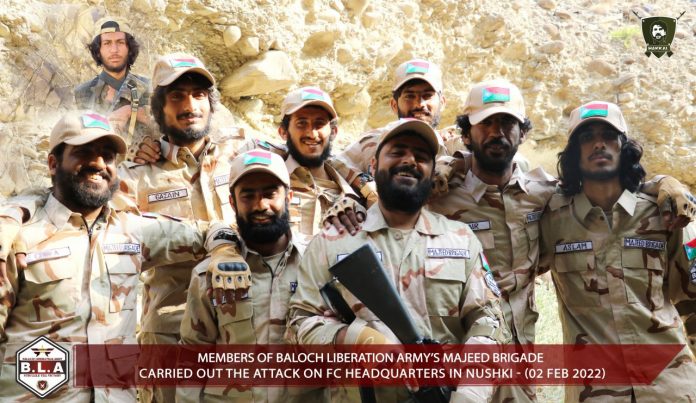
En un comunicat, el Baloch Liberation Army, l'Exèrcit d'Alliberament Balutx (BLA) que reivindica 195 soldats de l'Exèrcit del Pakistan morts en l'operació realitzada per la Brigada Majeed de BLA. L'exèrcit refuta les afirmacions reduint-les a 4 atacants i un militar mort i ha bloquejat tot l'accés al lloc de les operacions en curs. Les xarxes d'Internet i de telecomunicacions estan caigudes. La caserna central de Panjgur, districte fronterer, de l'exèrcit pakistanès encara està sota el control dels combatents per la llibertat del BLA hores després de l'atac realitzat per fidayeen (combatents suïcides) balutxs de l'unitat d'elit Brigada Majeed. En un atac simultani també van fer-se amb el control de la caserna de Noshki. Fa només una setmana la guerrilla va matar 10 militars en un altre atac.

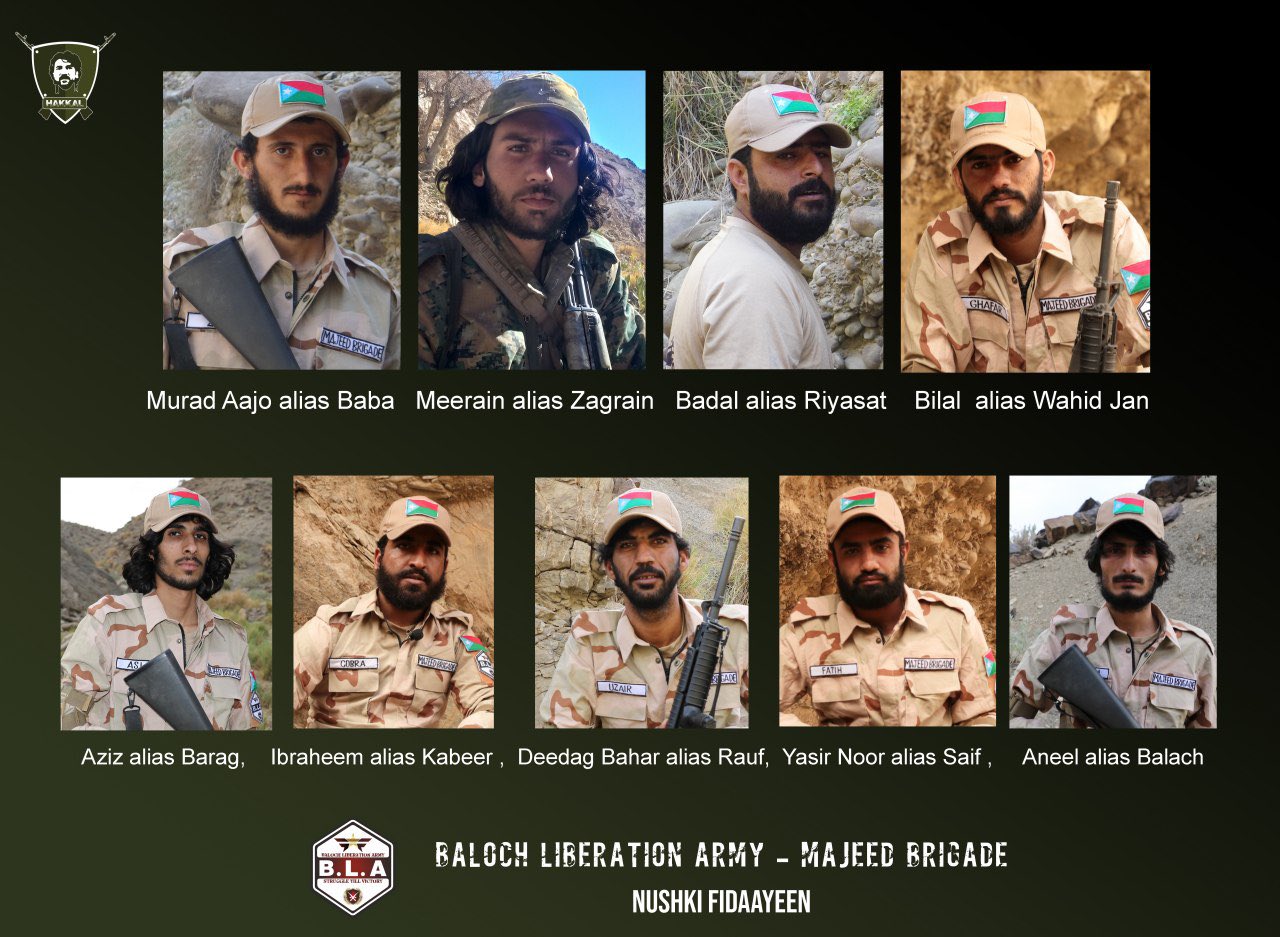
Després de 72 hores de combats (del 2 al 5 de febrer) les forces paquistaneses han recuperat el control de les seves casernes. La Brigada Majeed ha fet pública, el 6 de febrer, la identitat dels setze voluntaris de l'operatiu Ganjal (en record al combatent Ganjal Mazarcaigut el 24.09.2021 a Kalat del BLA.

2022/02/04
El Front d'Alliberament Oromo anuncia que almenys cinc vehicles de l'exèrcit etíop han estat volats per les seves mines els darrers dies
El Front d'Alliberament Oromo (OLF) ha anunciat que ha col·locat mines terrestres al sud d'Etiòpia. En un comunicat del 4 de febrer, l'OLF va afirmar que almenys cinc vehicles de l'exèrcit havien estat volats per les mines. També va afirmar que sis soldats del govern van ser assassinats el 2 de febrer en una emboscada a 45 km de Mega town a la carretera que va a la ciutat fronterera d'Etiòpia i Kenia de Moyale. La declaració protestava pel desplegament per part d'Etiòpia d'"assassins i equips terroristes" a Kenya i Somàlia. Fonts polítiques de Mogadiscio i Oromo diuen que tres activistes oromo, possibles membres de la poc coneguda Organització d'Alliberament del Poble Oromo, van ser segrestats per agents etíops i portats a través de la frontera cap a Etiòpia al voltant de l'1 de febrer de 1999.

Fighting between two Shan armed groups RCSS and SSPP
Fighting between two Shan armed groups, the Restoration Council of Shan State (RCSS) and the Shan State Progressive Party (SSPP), in Kyaukgu, Yatsauk Township in Southern Shan State, has displaced more than 2,000 people, according to a person displaced by the conflict.
The clashes intensified on February 8 and continued until February 11. The RCSS withdrew to the southern part of Kyauk Gu village on 10 February after heavy fighting between 8 and 9 February, Colonel Sai Phone Han, a spokesperson from SSPP. “Locals have to run in Yatsauk. Some even ran away to their close relatives. It is currently estimated that more than 2,000 people have been displaced,” according a displaced person, referring to a list that has been compiled of IDPs.
By other way on February 4th the TNLA declared ‘victory’ in northern Shan over RCSS.
In a small mountain village in northern Shan State’s Tangyang Township, more than 400 fresh recruits in crisp uniforms and newly shorn hair march down a dirt road, their AK-47 assault rifles resting against their shoulders.
They emerge gradually onto a parade ground in the remote village, where women in military uniforms are busy preparing food for around 2,000 guests, ranging from high-ranking soldiers to civil society members and local villagers. The soldiers stand to attention as traditional music with Ta’ang lyrics praising the revolution fills the air.
Everything about the January 12 ceremony marking the 59th anniversary of Ta’ang National Revolution Day, right down to the location, seems intended to project the growing power of the Ta’ang National Liberation Army.
Despite having a significant Ta’ang population, Tangyang has not traditionally been a stronghold for the group. The township, which is also home to many Shan people, is known for poverty, illicit drug production and conflict; numerous pro-military forces and ethnic armed groups, including the Shan State Progress Party, have a presence here.
TNLA leaders say the group gained control of parts of Tangyang as part of an agreement with the SSPP, its ally in northern Shan State, and has received a warm welcome from the Rumai, a Ta’ang tribe that lives in Tangyang and provided most of the new recruits marching at the ceremony.
“Previously our troops could not reach these areas, but now we have a presence,” TNLA commander-in-chief Tar Hold Plang said at the January 12 ceremony. “Finally, we can protect our Ta’ang people here.”
At the ceremony, there was little focus on the conflict raging across Myanmar in the wake of the February 2021 military coup. Although the TNLA has expressed some solidarity with the resistance, and condemned the military’s actions, it has not publicly sided with the National Unity Government, the administration established by ousted lawmakers following the February 2021 military coup.
TNLA leaders have so far refused to talk about their relationship with the NUG. They said they have sympathy for those also fighting the military regime and the abuses they have suffered, but remain focused on achieving self-determination for the Ta’ang people.
“We are very sorry to see those incidents – for example, when military troops burned civilians and villages,” TNLA spokesperson Tar Aik Kyaw told Frontier on the sidelines of the ceremony. “One of our ultimate goals is also to overthrow the military regime. But we are doing it our own way.”
One 25-year-old TNLA officer told Frontier: “We don’t understand why the military committed such brutal crackdowns and killed unarmed civilians, but I guess all mainlanders now know how the military had brutalised and abused people in our ethnic areas. They now understand why ethnic people are fighting against the military.”
Shifting allegiances
A five-hour drive to the east of Tangyang marks the edge of the autonomous region of the United Wa State Army, another armed group with which the TNLA has a close relationship.
The revolution day parade was the first major event at which the TNLA showed off its new logo – a sword and spear design that is very similar to that of the UWSA, Myanmar’s largest ethnic armed group with an estimated 20,000 to 30,000 soldiers.
The logo is worn on the left shoulder of the TNLA uniforms, while on the right shoulder sits a sun and dragon design that is also new.
“We Ta’ang are born from a father, the sun, and a mother, the dragon. Our new logo reflects the participation of both men and women in our revolution,” the 25-year-old TNLA officer explained.
The logo also reflects a shift in allegiances, replacing a design of crossed swords that was almost identical to that of the Kachin Independence Army.
The TNLA traces its roots back to the founding of the Palaung National Front, a Ta’ang armed group, in 1963. Thirteen years later, a PNF leader, Mai Kwan Tong, cooperated with the Kachin Independence Organisation to form the Palaung State Liberation Organisation/Palaung State Liberation Army, which quickly superseded the PNF. After 15 years of conflict, the PSLO reached a ceasefire with the military in 1991, but was forced to surrender its weapons entirely in 2005.
Some members, unhappy at the failure of the military regime to uphold promises made at the time of the ceasefire, revived the movement under the patronage of the KIO in 2009, forming the TNLA and a political wing, the Palaung State Liberation Front. For most of the past 12 years the group has been allied with the KIO.
In recent years though, the TNLA has drifted closer to the UWSA, opening a liaison office in Panghsang, the de facto capital of Wa state, in 2018. There has also been tension between the TNLA and the KIA over territory in northern Shan State, where Ta’ang and Kachin populations live in close proximity.
In contrast, the TNLA claim their alliance with the UWSA is based in part on ethnic kinship. The Ta’ang and Wa, along with the Mon of southern Myanmar, speak Mon-Khmer languages. More prosaically, the UWSA is also economically stronger than the KIA, and has better access to weaponry thanks to its links with China.
TNLA leaders claim that Ta’ang armed groups have a long history of alliances with their bigger “brother”, the UWSA.
“These days we have a political alliance, and we have good relations,” said Tar Aik Kyaw.
The revolution day anniversary follows a momentous year for the TNLA, one in which its leaders claim to have vanquished a key rival.
While many other ethnic armed groups were focused on responding to the February 1 military coup, the TNLA and SSPP spent most of the year locked in fighting with the Restoration Council of Shan State, a Shan armed group that has traditionally been based in the south.
This is not a new conflict. After signing the Nationwide Ceasefire Agreement in October 2015, the RCSS immediately pushed northward towards the China border, and managed to seize a significant portion of territory around Namhkam, Namtu, Kyaukme and Hsipaw townships. Although much of it was not previously controlled by the TNLA, it was mostly inhabited by Ta’ang people and therefore the TNLA perceived RCSS expansion as an act of aggression. In late 2015, the RCSS also seized territory from the SSPP, which was coming under attack from the Tatmadaw at the time. This prompted allegations that the RCSS had colluded with the military (a charge it denies), and also laid the foundations for a TNLA-SSPP alliance that would come back to haunt the RCSS.
The TNLA of 2015 was much less powerful than it is now, however, and was also clashing regularly with the Tatmadaw. It staged a tactical withdrawal, and focused on building up its strength by mobilising forces in its stronghold areas. It also built new alliances – not only with the SSPP and UWSA, but also groups such as the Arakan Army and Myanmar National Democratic Alliance Army.
After six years of on-and-off fighting, TNLA leaders say they have managed to push back the RCSS beyond the Mandalay-Muse Highway. As a result, the Ta’ang group now controls more territory than at any point in its history, or that of its predecessors.
Deputy Commander-in-Chief Tar Muse told Frontier at the ceremony that the TNLA had achieved its goal of evicting the RCSS from Ta’ang majority areas by the end of 2021. (The RCSS could not be reached for comment.)
Fighting resumed in January 2021, several weeks before the military coup. But TNLA leaders told Frontier that the coup had created an opportunity to make inroads against the RCSS: Because the Tatmadaw was distracted by events elsewhere in the country, it did little to prevent their attacks on the Shan group, and TNLA forces were able to move relatively freely around northern Shan State.
For the first time since arriving in northern Shan State, the RCSS was forced to withdraw in the face of a combined TNLA and SSPP attack, retreating from a mountain base near Nyaung Maung village north of Kyaukme, Tar Muse said.
The TNLA won an even more significant victory in October, when its troops forced the RCSS to retreat from its stronghold at Hu Hsun, after several months of fighting.
Located in the Loi Mauk hills near the village of Kyu Shaw, Hu Hsun had been the northern headquarters of the Shan armed group since 2015. The base fell despite being well-prepared for the attack, with deep trenches and other fortifications that gave the defending soldiers a significant advantage.
After Hu Hsun fell, the RCSS troops fell back to the southern side of
the Mandalay-Muse Highway, and the area north of the highway came under
the control of the TNLA’s Brigade 2.
A 30-year veteran of the Ta’ang struggle for autonomy, Tar Muse led the operations against the RCSS last year and said he was present when front-line troops took control of Pan Hkar village in Hsipaw Township in November.
“Now we control all of these areas – the RCSS has left,” he said. “Our losses were less than expected.”
Prior to 2015, armed groups were active in the area but not firmly entrenched; nominally, it was under state control. Now, the TNLA is determined to consolidate its authority.
“Before the RCSS came, the TNLA didn’t have bases in our area – we just sometimes saw their troops passing through our village,” said U Myo Oo, the 40-year-old state-appointed secretary of Hu Kut, a Ta’ang village about 5 kilometres south of Hu Hsun.
In September, the TNLA and RCSS clashed in Hu Kut, forcing residents to flee and setting some homes on fire. The RCSS were eventually driven out of the area.
“Now the TNLA has settled in the old RCSS camps in the mountains near our village,” Myo Oo told Frontier.
When Frontier visited the site of these recent battles in January, most Ta’ang said they were pleased to be living under TNLA leadership.
They listed a litany of complaints about RCSS rule, blaming the group for planting landmines, seizing livestock and restricting movement – the latter preventing the Ta’ang from harvesting their tea crop, their main source of income.
“If we wanted to leave our village, we needed to get permission from the RCSS,” said one Ta’ang resident. “They were very strict. In some villages in Hsipaw, the RCSS didn’t even let residents use mobile phones.”
Shan residents have more mixed feelings, but are quick to distance themselves from the RCSS. “We are worried about all sides – the TNLA, SSPP and RCSS,” said Sai Kyaw Ohn, 32, a resident of Loi Kone village, a cluster of more than 100 houses not far from Hu Kut. When the fighting broke out in September, the Loi Kone residents were also forced to flee, but have since returned to their homes. “I hope they [TNLA and SSPP] won’t oppress us just because we are Shan – we are not the RCSS. We need to have good relations with all EAOs in the area because we want to live in peace.”
On January 10 – two days before the ceremony – the TNLA announced in a statement following their annual meeting that they had evicted the RCSS from the Ta’ang-majority areas. Now, the group is focused on strengthening its grip in its newly acquired territory.
“We have to keep working hard to maintain our hold on these areas,”
said TNLA general secretary Brigadier-General Tar Bhone Kyaw. “We can’t
let our Ta’ang people be oppressed by other armed groups.”
In the decade since the TNLA was established, the group has managed to gain control of a significant slice of northern Shan State and is arguably the most powerful armed group in the region.
Its goal is to establish a Ta’ang state that includes all of Namhsan and Mantong townships, and parts of Namhkam, Mongyai, Tangyan, Kyaukme, Hsipaw, Lashio and Namtu townships in northern Shan State, as well as Mogok Township in northern Mandalay Region.
Such a state would cover a significantly larger area than the Palaung Self-Administered Zone created under the 2008 Constitution, which comprises just Namhsan and Mantong.
“We are not greedy – we are not demanding control of the cities, that will just lead to endless clashes. We are just demanding the regions where the majority of the people are Ta’ang,” said Tar Bhone Kyaw.
Although it has forces operating in all of these townships, Mantong, Namhsan and Namkham are considered TNLA strongholds. In these areas it has already established an administrative system, which it is working to roll out to the areas of Kyaukme and Hsipaw over which it has recently assumed territorial control.
Meanwhile, the TNLA said it has also established a legal department that will act as a judicial system within its territory, and in some Ta’ang villages in Tangyang Frontier observed TNLA members working with SSPP members to resolve land disputes between Ta’ang and Shan residents.
In these respects, the TNLA seems to be following in the footsteps of the Arakan Army, which was established around the same time, also under KIA patronage. Over the past year, the Arakan Army has consolidated control over the territory it gained during a brutal two-year war with the military in 2019-20 by launching a judicial apparatus, rolling out administrative offices and expanding its taxation system.
The TNLA administrative system is similar to the General Administration Department, with district, township and village tract offices, whose main responsibility is law enforcement and security.
A major focus is eradication of illicit drug use, which is an issue that the TNLA has prioritised since its re-establishment. Focusing on drug use seems to have won it significant legitimacy and popular support among Ta’ang communities, despite its harsh methods, which include detaining addicts and sending them to “detention centres”.
“Before 2010, drug use was common here,” said Mai Lin Thu*, the administrator of a village of more than 100 households in Namhsan Township. “Now, people don’t dare to use drugs because the TNLA will arrest them.”
In Namhsan, Mantong and Kyaukme, the TNLA’s administrative staff have also ramped up tax collection. The group collects annual taxes from liquor shops, grocery stores and other small businesses up to a maximum of K50,000 a year, locals told Frontier. The TNLA also levies taxes on larger business owners, brokers and traders based on their income, but this aspect of its tax system is significantly more opaque.
In the aftermath of the military coup, the TNLA administration department has also banned the sale of military-owned products in townships under its jurisdiction. Frontier did not see any shops selling military products during our recent visit to TNLA-administered areas of northern Shan; residents said the ban was strictly enforced, with only a few shops in urban areas still stocking military products.
“If they find Myanmar Beer or Red Ruby cigarettes for sale in my shop, they take them and destroy them. We’ve also been warned that they might take further action if we are caught selling them,” said a 48-year-old woman from a village in Kyaukme Township, who spoke on condition of anonymity.
As Myanmar’s Delta wave of COVID-19 spread through Shan State in late 2021, the TNLA also began taking steps to control the virus, setting up checkpoints and introducing a testing and quarantine system. “If I came back to my village after spending a night in one of the cities, a TNLA medical officer would test me with a rapid test kit and I would also need to quarantine,” said Lwe Aye Sein, a 47-year-old resident of rural Namhsan Township. “The only way to avoid quarantine is to return the same day, without spending a night out of our village. It can make things a little difficult, but we have to follow the rules.”
The TNLA did not officially disclose its military strength at the revolution day ceremony. Tar Hod Plarng, the TNLA’s commander-in-chief, said only that the group has seven brigades and more than 30 battalions.
Based on troop numbers provided by battalion-level officers, the TNLA now has around 10,000 troops under its military department, and some others who are based in its administrative and other departments.
Frontier understands that about 1,000 new recruits graduated from TNLA training in January, including the 400 who marched at the Ta'ang National Revolution Day celebrations in Tangyang that Frontier attended.
One of the more controversial aspects of the TNLA’s expansion is its reliance on conscription, something the RCSS has also been accused of. In areas under its full control, it implements a policy under which each household has to provide at least one recruit, and those with many sons often have to provide two.
Some families have been unhappy at the recruitment policy and tried to send their children to other areas so they can avoid being conscripted. Although this worked previously, it has become more difficult to evade conscription due to the strengthening of the TNLA administrative apparatus.
The TNLA’s geographic expansion has also provided a pool of new recruits. Myo Oo, from Hu Kut village in Kyaukme, said the departure of the RCSS from the area had encouraged more young people to enlist, with dozens from Hu Kut signing up in January in response to a TNLA recruitment drive.
“After the RCSS left, most young people wanted to join the Ta’ang army,” he said. “Under the RCSS our villages were oppressed so some youngsters believe that joining the army will strengthen our people.”
TNLA leaders say they plan to expand their territory to other
areas where Ta’ang people live, including Mongyawng and Mong Hsu
townships, on the basis that these communities need to be protected from
other ethnic groups.
“Before the armed uprising, our Ta'ang were oppressed,” TNLA vice chair General Tar Jok Jar said at the Revolution Day celebrations.
“Now that the TNLA has emerged to represent the Ta'ang, it can no longer be suppressed ... but in the future, we need to make our military stronger,” he added.
Both TNLA leaders and rank-and-file soldiers say that autonomy for the Ta’ang is still a long way off, despite the group’s recent expansion.
The 25-year-old TNLA official who spoke to Frontier on the
sidelines of the anniversary celebration said he believed it would be an
even longer struggle than the fight to overthrow the military regime.
“They might be successful in three years or five years, but our journey
could be much longer. It’s not certain we’ll be able to get a Ta’ang
state in the time of my sons or grandsons,” he said. “But what we know
is that we have to fight.”
beginning in 2018, the Southern
Shan State Army (RCSS) and the De'ang Army (TNLA) have had many
conflicts over the "territorial" disputes in the Mansang and Bangui
areas of Nandu Town. In 2019, the military and the Ta'ang Army (TNLA)
also fought in the same area. Due to the tense situation in the area,
thousands of villagers were forced to flee their homes to avoid the
fighting. On December 7, 2020, after a year of hiatus, the fighting
broke out again.

2022/02/03
El govern autònom anuncia un fons addicional de 191.000 £ per les llars d'infants en immersió en gal·lès (Mudiad Meithrin)
El govern gal·lès ha anunciat un fons addicional de 191.000 £ per donar suport a Mudiad Meithrin, inclòs el finançament per ajudar a reiniciar els grups de pares i nens petits, Cylch Ti a Fi. Segons el govern autònom els grups de pares i nens petits com Cylch Ti a Fi tenen un paper important a l'hora de donar suport al benestar dels pares i dels fills, i que el finançament permetrà a Mudiad Meithrin donar suport a tants grups com sigui possible per reunir-se amb seguretat, a mesura que les restriccions de Covid es redueixen. Els grups no s'han pogut reunir com ho farien normalment a causa de les restriccions de Covid-19.
Els grups Cylch Ti a Fi ofereixen una oportunitat perquè les famílies i els nens gaudeixin jugant junts en un ambient gal·lès informal, independentment de la capacitat de la llengua gal·lesa. Els grups ofereixen una oportunitat perquè les famílies utilitzin més gal·lès amb els seus fills i ajuden a fomentar nous parlants de gal·lès.
El finançament també s'utilitzarà per donar suport i ampliar el programa Cam wrth Gam, que ofereix cursos de guarderia per als alumnes de 10 a 13 anys de secundària. El programa dóna suport a la iniciativa del govern gal·lès d'ampliar l'oferta de primers anys en gal·lès, contribuint al desenvolupament de personal qualificat per a l'atenció infantil de nivell mitjà gal·lès. El govern gal·lès diu que el finançament s'afegeix als més de 3 milions de lliures esterlines que ofereix actualment a Mudiad Meithrin per liderar l'expansió de la prestació d'atenció infantil a Gal·les, així com per planificar la mà d'obra necessària per donar-hi suport.
2022/02/02
18 anys després, la llengua bretona torna a ser ensenyada a la universitat de Nantes/Naoned
Divuit anys des que la llengua bretona ja no apareixia al programa de la Universitat de Naoned/Nantes. “Una anomalia, a la ciutat dels ducs de Bretanya. Mentre s'imparteix des de Harvard fins a Moscou, passant per Cambridge”, subratlla Florian Le Teuff, tinent d'alcalde de Nantes, encarregat dels temes
Qui va iniciar les reunions de treball al voltant d'aquesta temàtica a l'ajuntament gaudeix d'aquest retorn. Des de principis de febrer es faran, classes de bretó, dues hores i les places ja han estat esgotades.
Festival of Indigenous languages
Website and registration are now live! http://bit.ly/ELP-festival
Sneak preview - let's gather together to celebrate the start of the International Decade of Indigenous Languages 2022-2032! (For info about the Decade, check out International Year of Indigenous Languages 2019!)
Join ELP and language champions around the world to...
Learn from global Indigenous language revitalization leaders: what's most encouraged and inspired them in their last decade(s) of work, and their visions for the coming decade!
Share about your languages, cultures, and work at informal coffee chats and open mic sessions!
Connect with other language revitalization practitioners, activists, teachers, learners, and allies from around the world!
The Festival is open to all, 100% free, and 100% online. We'll have talks in many different time zones, so wherever you are, tune in for encouragement, inspiration, and community!


Stay tuned for registration info, a list of speakers, and the schedule

2022/01/31
Operació "caça a l'home" de les Forces Armades d'Angola a Cabinda en reacció als atacs del FLEC

El crit d'ajuda ve de Dinge i Massabi on la situació es considera crítica, perquè com a reacció als atacs del Front d'Alliberament de l'Enclavament de Cabinda, Forces Armades Cabindès (FLEC-FAC) que van tenir lloc entre els dies 6 i 10. de gener a Cabinda d'aquest any. El Front per a l'Alliberament de l'Enclavament de Cabinda-Forces Armades Cabindès presidits per Alexandre Tati Builo, va explicar: "Parlant específicament dels atacs del 6 de gener. Sí, hi va haver aquests atacs, tal com ja circulen persones mortes per les xarxes socials. Sí, van haver-hi aquests atacs i van ser autors del Front d'Alliberament de l'Enclavament de Cabinda, Forces Armades Cabindeses – Forces dirigides pel Sr. Alexandre Tati, com a President i el Sr. Estanislau Miguel Boma com a Cap d'Estat Majorˮ. Ens reconeixem com els autors d'aquests atacs i en aquest moment us parlo del gran moviment de les tropes sobre el terreny. Reconeixem i afirmem que som els autors d'aquests atacs. Les fotografies que circulen per les xarxes socials mostren cossos estirats a terra, amb uniformes militars amb sang. Sis soldats angolenys foren morts en els combats.
Les Forces Armades d'Angola – FAA en represàlia van llançar l'operació caça a l'home, que en comptes de colpejar objectius militars de la Guerrilla Cabindesa n'aprofiten per aterrir també les poblacions civils amb accions contràries a les Convencions de Ginebra de 1949 i als seus protocols addicionals. es parla de tortura, molta gent fins i tot va perdre la paraula a causa de les accions de tortura patides, la majoria dels ferits estan hospitalitzats a l'hospital de Dinge.
També es parla de privacions com la prohibició als populars de no moure les seves finques i molt més. Es recorda que en aquest atac es va capturar un guerriller de la FAC de la FLEC, la identitat del qual encara no ha estat revelada per les parts, però que ja es troba a Luanda, després d'haver estat colpejat ferotgement a les dependències de la Casa de Seguretat de la Presidència de la República. d'Angola a Cabinda e, que encara es troba sota una severa tortura psicològica per part d'agents dels Serveis d'Intel·ligència Militar sota el comandament del general João Pereira Massano.
Basat en l'article 3(1) de la Convenció de Ginebra de 1949 i els seus protocols addicionals que "Determina el tracte humà per a totes les persones en poder de l'enemic, sense cap distinció adversa". Prohibeix especialment els assassinats; mutilacions; tortures; tracte cruel, humiliant i degradant; presa d'ostatges i judicis parcialsˮ fem una crida a les Nacions Unides, en particular al Consell de Drets Humans i altres organitzacions internacionals per a la defensa dels drets humans, perquè demanin al govern de la República d'Angola sota la presidència de João Manuel Gonçalves Lourenço que cessi immediatament les seves pràctiques de terrorisme d'estat contra les poblacions indefenses de Cabinda a Dinge i Massabi.
Que alliberi immediatament la guerrilla de Cabinda (identitat per revelar) capturada en combat arran dels últims fets ocorreguts entre el 6 i el 10 de gener d'aquest any entre les Forces Armades de Cabinda - FAC i les Forces Armades d'Angola - FAA , i que sigui tractat com recomana l'article 3(1) de la Convenció de Ginebra de 1949 i els seus protocols addicionals.
En cas contrari, la Cort Penal Internacional (CPI) serà l'única instància judicial a la qual les organitzacions polítiques i cíviques de Cabinda recorreran per reclamar justícia en cas que li succeeixi alguna cosa dolenta a la guerrilla de les FAC capturada a Cabinda per la FAA i que es troba a Luanda sota greus condicions psicològiques. i tortures físiques per part d'agents dels Serveis d'Intel·ligència Militar dirigits pel general João Pereira Massano de la foto, que s'hauria de fer responsable penalment, independentment de si Angola no és signatari de l'Estatut de Roma.
Angolan Armed Forces ‟operation manhunt‟ launched in Cabinda in reaction to the attacks of the FLEC
The Angolan Armed Forces – FAA in retaliation launched the ‟operation manhunt‟ which instead of hitting military targets of the Cabindese Guerrilla are taking advantage of this to also terrorize civilian populations with actions that are contrary to the 1949 Geneva Conventions and its additional protocols, there is talk of torture, many people even lost their speech due to the torture actions suffered, most of the injured are hospitalized in the Dinge hospital.
There is also talk of deprivations such as the ban on popular people not to move their farms and much more. It is recalled that in this attack a FLEC FAC guerrilla was captured, whose identity has not yet been revealed by the parties, but who is already in Luanda, after having been savagely beaten in the premises of the Security House of the Presidency of the Republic of Angola in Cabinda e, which is still under severe psychological torture by agents of the Military Intelligence Services under the command of General João Pereira Massano.
Based on article 3(1) of the 1949 Geneva Convention and its additional protocols which ‟Determines humane treatment for all individuals in the power of the enemy, without any adverse distinction. It especially forbids murders; mutilations; tortures; cruel, humiliating and degrading treatment; hostage-taking and partial trialsˮ we appeal to the United Nations, in particular the Human Rights Council and other international organizations for the defense of human rights, to ask the government of the Republic of Angola under the presidency of João Manuel Gonçalves Lourenço to immediately cease its practices of state terrorism against the defenseless populations of Cabinda in Dinge and Massabi.
That he immediately release the Cabinda guerrilla (identity to be revealed) captured in combat as a result of the latest events that took place between the 6th and 10th of January of this year between the Cabindese Armed Forces - FAC and the Angolan Armed Forces - FAA, and that he be treated as recommended by article 3(1) of the 1949 Geneva Convention and its additional protocols.
Otherwise, the International Criminal Court (ICC) will be the only judicial instance that political and civic organizations in Cabinda will resort to to claim justice in case something bad happens to the FAC guerrilla captured in Cabinda by the FAA and who is in Luanda under severe psychological and physical torture by agents of the Military Intelligence Services directed by General João Pereira Massano in the photo, who should be held criminally responsible, regardless of whether Angola is not a signatory of the Rome Statute.

Bloqueig dels indígenes wayúu davant la incompetència del govern colombià
Per diverses hores va estar paralitzada la via Riohacha a Maicao, a l'alçada del sector de Cuatro Vias, per la presència d'indígenes de l'ètnia wayuu. L'atur va ocasionar paràlisi en aquest important corredor vial del departament de la Guajira, havent d'intervenir les autoritats del municipi de Maicao, ja que el sector de Cuatro Vias és jurisdicció de Maicao. Cal indicar que aquests indígenes wayuu estaven fent aquesta protesta des de fa onze dies i avui dijous 6 de gener van decidir prendre's el sector de Cuatro Vias, a Maicao.
Sobre això, el Secretari de Govern de Maicao, Santander Restrepo Barros en conjunt amb les autoritats de la Policia Nacional de la Guajira van aconseguir desbloquejar la via mitjançant el diàleg amb les comunitats wayuu.També hi va ser present l'alcalde del municipi fronterer de Maicao, Mohammad Dasuki, escoltant les inquietuds dels manifestants.
“Es va dur a terme una reunió amb els manifestants de les comunitats veïnes al farciment sanitari, en el qual va estarIlder Aguilar i l'autoritat Rafael Barros, on l'administració amb l'alcalde de Maicao es van aixecar unes actes, a més del representant Jair Palma , a més d'Asodeagua José Gregorio, on es van arribar a acords. Per part de l'administració municipal hi ha uns diners que estan represos amb un conveni amb governació, el qual ha de ser liquidats per poder apropiar-se els diners que són 400 milions de pesos i l'alcalde es compromet a fer una apropiació després de ser liquidats els diners amb la governació per poder apropiar-los novament. Es compromet a apropiar 200 milions de pesos que farien falta per a la realització de les 37 cases”, va afirmar el Secretari de Govern de Maicao, Santander Restrepo Barros.
De la mateixa manera, el funcionari va informar que “es va sol·licitar un cens amb el tema dels pous i els molins per poder-los incloure dins dels manteniments que realitzarà l'administració. Se'ls tindrà en compte en temes de piles públiques i per part de l'administració es gestionarà amb diverses entitats per beneficiar-los. Gràcies a l'alcalde municipal vam poder arribar a aquests acords i vam poder aixecar l'atur a hores de la tarda. També es van programar taules tècniques i de seguiment als compromisos següents”.
Es va informar a més que a la intervenció a Cuatro Vias van estar presents per part de l'administració municipal l'Alcalde Mohamad Dasuki, la Direcció d'Afers Indígenes i el secretari de Govern de Maicao.


2022/01/30
Concentració del Moviment per a l'Autodeterminació de la Cabília denunciant el govern d'Algèria per "exterminar el poble cabil" (berber)

La Coordinació de París Île-de-France del Moviment per a l'Autodeterminació de la Cabília (MAK) va organitzar una protesta a París el 30 de gener denunciant el projecte "Zero Kabyle" implementat per la junta al poder a Algèria per "exterminar el poble cabil".
Aquesta concentració ha reafirmat el seu suport als detinguts polítics cabils empresonats pel règim algerià, i ha denunciat l'apagada mediàtica a la repressió exercida pels generals contra els militants cabilis. L'octubre de 2021, Amnistia Internacional havia assenyalat la responsabilitat del règim politicomilitar d'Alger per haver criminalitzat el MAK, qualificant els seus militants i simpatitzants de "terroristes, en el marc de la nova repressió que té com a objectiu la dissidència". Durant el juny del mateix any, el règim algerià va modificar la definició de “terrorisme” per permetre el processament dels activistes pacífics i de totes les veus crítiques. Desenes de periodistes i activistes queden així empresonats per publicacions a Internet que critiquen les autoritats i per la seva afiliació al Moviment per a l'autodeterminació de Cabília, alarma AI. El MAK ha convocat una nova concentració pel 13 de febrer.

La guerrilla balutx realitza un dels més mortífers contra les forces de seguretat pakistaneses en els darrers anys
Fins a 10 soldats pakistanesos van ser morts després que els activistes balutx obrissin foc a un lloc de control de seguretat al districte de Kech de Balutxistan, va dir dijous l'ISPR (Inter-Services Public Relations). En un comunicat, l'ala de mitjans de l'exèrcit va dir que l'incident va tenir lloc la nit entre el 25 i el 26 de gener, on un militant balutx va morir i diversos altres van resultar ferits. L'assalt va ser un dels més mortífers contra les forces de seguretat pakistaneses en els darrers anys i arriba en un moment d'augment dels disturbis. Cap facció armada ha assumit l'acció.

2022/01/24
UWSA, the most powerful ethnic armed group in Burma, preparing for a attack by the Shan RCSS
The United Wa State Army (UWSA), the most powerful ethnic armed group
in Myanmar, is deploying troops in Khaing Lone, a town in southern Shan
State, announced the UWSA-run Wa State TV on Saturday. The deployment follows widespread rumors on social media that the
UWSA is preparing for a possible attack by rival ethnic armed group the
Restoration Council of Shan State (RCSS), whose headquarters Loi Tai
Leng is adjacent to Khaing Lone.
Hundreds of UWSA soldiers including the elite commando unit along with artillery have been deployed in Khaing Lone, which is part of the territory of UWSA military region 171, according to the Chinese-language news broadcast aired by Wa State TV.
The report said that the UWSA would not launch an assault, but will decisively repulse any incursions into military region 171.
The RCSS has alleged that the UWSA is assisting its rival, the Shan State Progress Party, the political wing of the Shan State Army-North (SSA-N).
Both SSPP/SSA-N, and the RCSS and its armed wing the Shan State
Army-South (SSA-S) were formed to seek autonomy for Shan State. The RCSS
is active in southern Shan State, while the SSPP is based in the north.
However, the SSA-S also operates in northern Shan State and has been
fighting the SSA-N for years over territorial disputes.
The Ta’ang National Liberation Army (TNLA) is also fighting alongside the SSPP/SSA-N.
The RCSS reportedly sent a letter to the UWSA recently, warning that it would attack the ethnic Wa group’s military region 171 if it continued to back up the SSPP/SSA-N and the TNLA.
The Irrawaddy was unable to reach the UWSA’s Lashio liaison officer Nyi Rang for a comment.
RCSS Secretary 2 Major Kham San told The Irrawaddy that there are no military tensions between the two sides on the ground. 
RCSS troops.
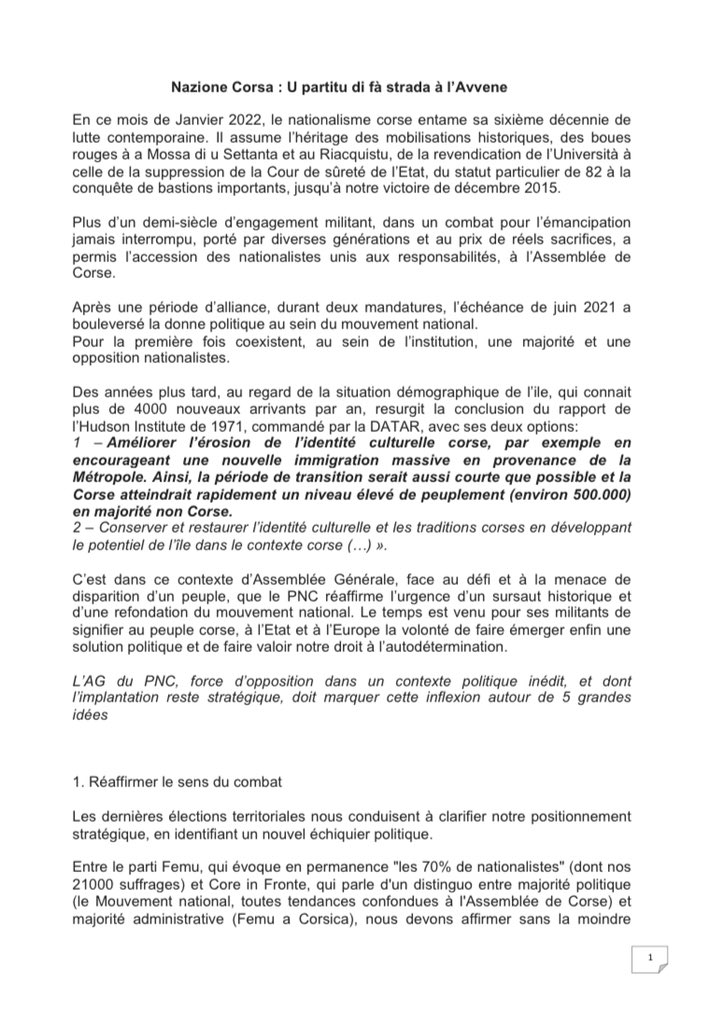
'Da fà nazione' (Fer nació): El Partit de la Nació Corsa (PNC) renova la seva direcció


Ho ha fet en una assemblea general, celebrada a Corti, el 23 de gener sota el lema 'Da fà nazione' (Fer nació). S'han escollit els membres de la direcció del partit formada per l'executiva i el Cunsigliu. També s'ha aprovat el balanç financer, el polític i la línia de política internacional dins de l'ALE (Aliança Lliure Europea) i la plataforma hexagonal Regions i Pobles Solidaris a més del document adjunt.



20.09.2026

26.09.2026

Llibertat Marhrang Baloch
